

Uncategorized
Does Psilocybin Show Up on Drug Tests? Expert Guide to Detection
tammi
Sisällysluettelo
Does psilocybin show up on drug tests? This is one of the most common questions among individuals concerned about workplace screenings, legal proceedings, or athletic testing. The straightforward answer is that psilocybin, the psychoactive compound found in magic mushrooms, does not appear on standard drug tests. However, the complete picture involves understanding testing methods, detection windows, and specific circumstances in which specialized testing may occur.
Standard five-panel and ten-panel drug tests—the most commonly used screening methods in employment and legal settings—do not include psilocybin in their detection panels. These tests typically screen for substances like marijuana, cocaine, amphetamines, opiates, and PCP. Psilocybin requires specialized testing procedures that are significantly more expensive and rarely implemented outside specific contexts.
Understanding how psilocybin metabolizes in your body, the detection capabilities of different testing methods, and the timeline for elimination provides crucial information for making informed decisions about drug testing situations.
What Is Psilocybin and How Does It Work?
Psilocybin is a naturally occurring psychedelic compound found in over 200 species of mushrooms, commonly referred to as “magic mushrooms” or “shrooms.” When ingested, psilocybin converts rapidly into psilocin, the active metabolite responsible for the hallucinogenic effects.
Key characteristics of psilocybin:
- Classified as a Schedule I controlled substance in the United States
- Produces altered perception, mood changes, and visual distortions
- Effects typically last 4-6 hours after consumption
- Metabolizes quickly in the body compared to many other substances
- Low addiction potential with minimal physical withdrawal symptoms
The body processes psilocybin through the liver, where enzymes break it down into psilocin and other metabolites. This rapid metabolism is one reason why detection windows are relatively short compared to substances like marijuana or methamphetamine.
Does psilocybin show up on drug tests?
The simple answer is that näkyvätkö sienet huumetestissä depends entirely on the type of test administered. Standard workplace drug screenings do not detect psilocybin or psilocin.
Standard Drug Testing Panels
Five-panel drug test screens for:
- Marijuana (THC)
- Kokaiini
- Amfetamiinit
- Opiates
- Phencyclidine (PCP)
Ten-panel drug test screens for:
- All substances in the five-panel
- Barbituraatit
- Bentsodiatsepiinit
- Methadone
- Methaqualone
- Propoxyphene
Neither panel includes psilocybin testing. The cost-benefit analysis for most employers, organizations, and legal entities makes routine psilocybin testing impractical.
Specialized Psilocybin Testing
Specialized tests can detect psilocybin and its metabolites, but these require:
- Specific laboratory equipment
- Higher costs ($100-$300 per test versus $30-$50 for standard panels)
- Advanced analytical methods like liquid chromatography-mass spectrometry (LC-MS)
- Deliberate intent to test for psilocybin specifically
These specialized tests are typically reserved for:
- Specific legal cases involving suspected psilocybin use
- Research studies monitoring psilocybin administration
- Forensic investigations requiring comprehensive toxicology
- Situations where psilocybin use is explicitly suspected
Kuinka kauan sienet pysyvät elimistössäsi?
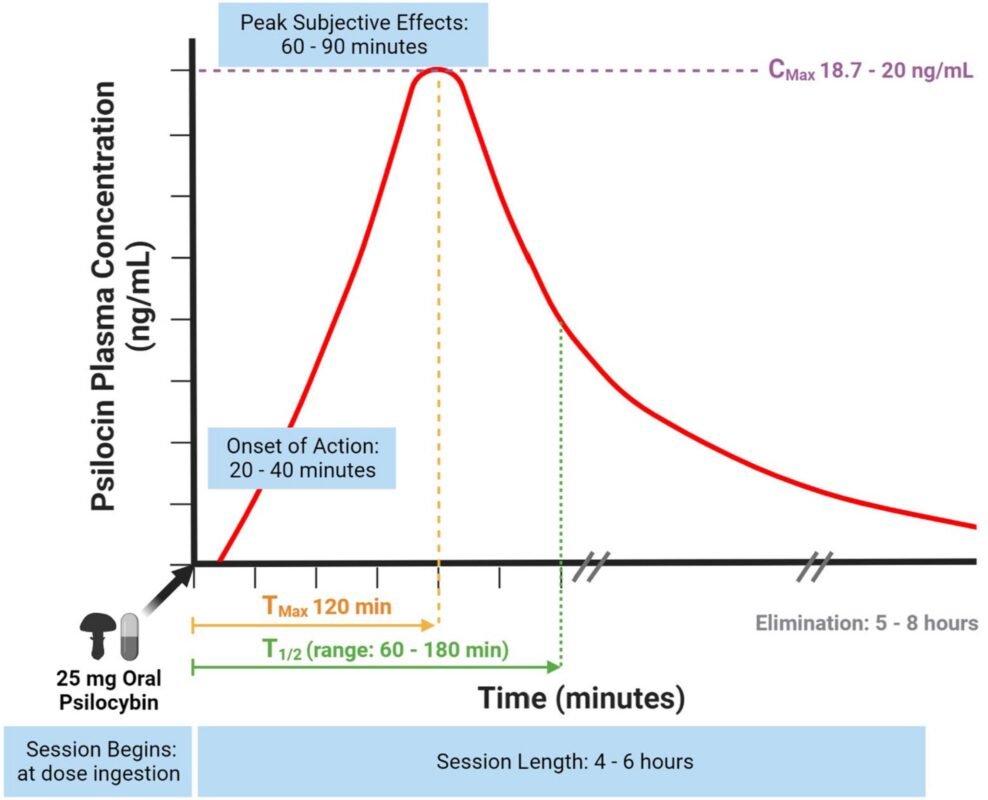
How long do shrooms stay in your system varies based on multiple physiological and circumstantial factors. Understanding the psilocybin half life in the body helps clarify detection timelines.
Psilocybin Half-Life and Metabolism
The psilocybin half-life in the body is remarkably short:
- Psilocybin half-life: Approximately 50 minutes
- Psilocin half-life: Approximately 50-100 minutes
- Complete elimination: Generally 24-48 hours for most individuals
This rapid metabolism means psilocybin and its primary metabolites clear from your system significantly faster than most other drugs. Kuinka kauan sienet pysyvät elimistössäsi?
Detection Windows by Testing Method
Urine Testing:
- Detection window: 24-48 hours after use
- Most common specialized testing method
- Can detect psilocin and metabolites
- Effectiveness decreases rapidly after 24 hours
Blood Testing:
- Detection window: Up to 24 hours
- Extremely short detection period
- Rarely used due to invasive nature and brief window
- Most accurate within first 12 hours after consumption
Hair Follicle Testing:
- Theoretical detection: Up to 90 days
- Extremely rare for psilocybin
- Requires specialized laboratory capabilities
- Not standard practice in any testing scenario
Saliva Testing:
- Detection window: 1-5 hours
- Very limited research on effectiveness
- Not commercially available for psilocybin
- Impractical for most testing situations
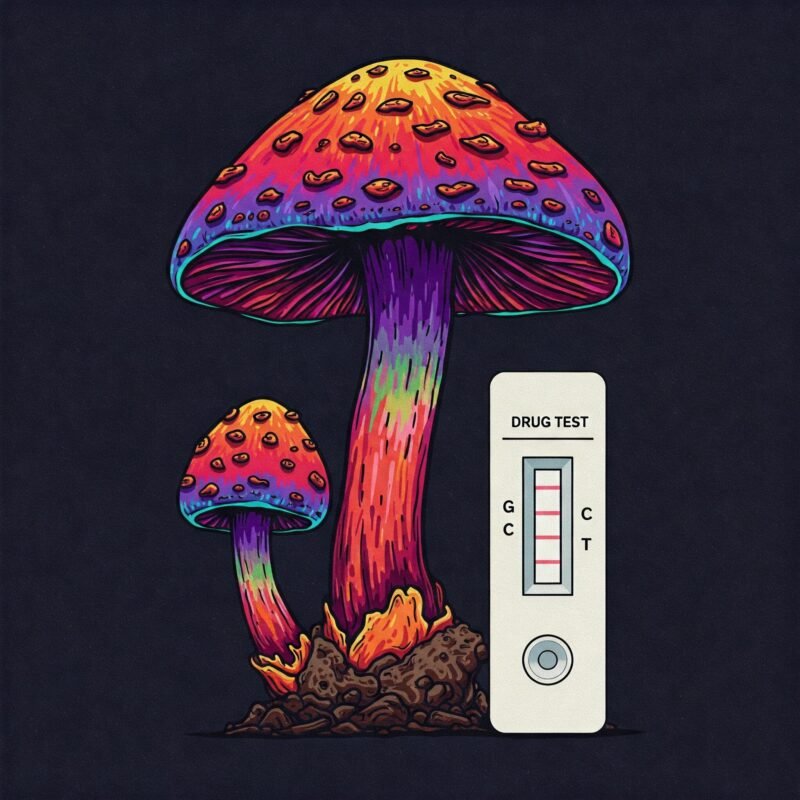
Factors Affecting Psilocybin Drug Test Detection Time
The psilocybin drug test detection time depends on several individual and environmental factors:
Metabolic Rate:
- Faster metabolism eliminates psilocybin more quickly
- Age, weight, and overall health impact metabolic speed
- Regular exercise can enhance metabolic efficiency
- Younger individuals typically process substances faster
Dosage and Frequency:
- Higher doses may extend detection windows slightly
- Single use clears faster than repeated consumption
- Body accumulation minimal due to rapid metabolism
- Frequent use may theoretically extend detection by hours, not days
Hydration and Diet:
- Adequate hydration supports kidney function and elimination
- Well-functioning kidneys process and excrete metabolites efficiently
- Diet quality affects overall metabolic health
- Dehydration may slightly slow elimination processes
Individual Body Chemistry:
- Liver enzyme variations affect metabolism rates
- Kidney function impacts excretion speed
- Genetic factors influence drug processing
- Pre-existing health conditions may alter timelines
Mushroom Potency:
- Psilocybin content varies significantly between species
- Cultivated mushrooms may have different potencies than wild varieties
- Preparation method affects absorption rates
- Dried versus fresh mushrooms have different concentrations
Can Magic Mushrooms Be Detected in Urine?
Yes, can magic mushrooms be detected in urine through specialized testing, but with significant limitations. Urine testing represents the most practical method for psilocybin detection when specifically requested. Does psilocybin show up on drug tests
Urine Testing Process
Specialized urine tests detect:
- Psilocin (primary metabolite)
- Psilocybin (less common, converts quickly)
- Secondary metabolites in trace amounts
The testing procedure requires:
- Collection: Standard urine sample collection
- Preliminary screening: Immunoassay testing (if available)
- Confirmation: LC-MS or GC-MS for accurate identification
- Analysis: Laboratory evaluation of metabolite presence
Limitations of Urine Testing
Time sensitivity:
- Effectiveness drops dramatically after 24 hours
- Most reliable within 12 hours of consumption
- After 48 hours, detection becomes extremely difficult
- False negatives increase with time elapsed
Testing requirements:
- Must specifically request psilocybin testing
- Standard panels will not reveal psilocybin use
- Laboratory must have appropriate equipment
- Trained personnel needed for accurate analysis
Cost considerations:
- Specialized testing costs 3-6 times more than standard panels
- Most organizations avoid this expense without cause
- Insurance rarely covers psilocybin-specific testing
- Budget constraints limit widespread implementation
Real-World Testing Scenarios
Understanding practical applications helps clarify when psilocybin testing might occur:
Employment Drug Testing
Pre-employment screening:
- Standard five or ten-panel tests
- Psilocybin testing extremely rare
- Cost-prohibitive for routine screening
- No legal requirement to test for psilocybin
Random workplace testing:
- Follows same patterns as pre-employment
- Focuses on substances impairing workplace safety
- Budget considerations prevent specialized testing
- Company policy rarely includes psilocybin
Legal and Criminal Justice System
Probation and parole:
- May include specialized testing if psilocybin use suspected
- Depends on jurisdiction and case specifics
- More common in areas with recent psilocybin-related charges
- Officer discretion plays significant role
DUI and traffic incidents:
- Blood tests might detect recent use
- Requires suspicion of hallucinogen impairment
- Standard protocols don’t include psilocybin
- Evidence of impairment triggers specialized testing
Athletic and Competitive Testing
Professional sports:
- Not banned by most major sports organizations
- World Anti-Doping Agency (WADA) does not prohibit psilocybin
- No competitive advantage associated with use
- Testing extremely rare in athletic contexts
Amateur competitions:
- Follow professional organization guidelines
- Rarely test for substances without performance-enhancing properties
- Budget constraints limit testing scope
- Focus remains on traditional banned substances
Pros and Cons of Current Psilocybin Testing Standards
Advantages
Privacy protection:
- Standard testing doesn’t invade personal choices
- Individuals maintain autonomy over non-impairing substances
- Reduced discrimination for therapeutic or spiritual use
- Lower risk of employment consequences for legal activities in some jurisdictions
Cost efficiency:
- Organizations save money on unnecessary testing
- Resources allocated to relevant safety concerns
- More comprehensive standard panels for problematic substances
- Better investment in workplace safety programs
Practical limitations:
- Short detection window reduces testing effectiveness
- Rapid metabolism makes routine testing impractical
- Low workplace impairment risk justifies current approach
- Focus on substances with longer-term impairment patterns
Disadvantages
Detection gaps:
- Specialized situations may warrant testing capabilities
- Recent use might go undetected when relevant
- Legal proceedings may lack necessary evidence
- Safety-sensitive positions have limited options
Inconsistent policies:
- Jurisdictional variations create confusion
- Decriminalization areas face policy challenges
- Employment law unclear regarding psilocybin in some regions
- Testing protocols lack standardization
Expert Recommendations and Best Practices
Based on current research and practical considerations, here are professional recommendations:
For individuals concerned about testing:
- Understand your testing context: Research the specific requirements of your situation
- Know detection timelines: Plan accordingly if specialized testing is possible
- Stay informed: Laws and policies are evolving, especially with decriminalization efforts
- Consider timing: If concerned, allow 72 hours minimum before any potential test
- Hydrate appropriately: Maintain normal hydration to support natural elimination
For organizations implementing drug policies:
- Focus testing resources wisely: Prioritize substances that impair workplace safety
- Update policies regularly: Reflect current legal landscape and research
- Educate employees: Clear communication about testing scope and procedures
- Consider alternatives: Impairment-based testing rather than metabolite detection
- Respect privacy: Avoid unnecessary intrusion into legal personal activities
For healthcare and research contexts:
- Use appropriate testing methods: LC-MS provides most accurate results
- Implement proper timing: Test within 24 hours for best detection rates
- Document thoroughly: Record all relevant factors affecting results
- Follow protocols: Adhere to chain-of-custody and quality assurance standards
- Interpret carefully: Consider all factors influencing detection outcomes
The Future of Psilocybin Testing
The landscape of psilocybin testing continues evolving alongside changing legal and social perspectives:
Decriminalization impact:
- Multiple jurisdictions have decriminalized psilocybin
- Oregon and Colorado have legalized regulated therapeutic use
- Workplace policies must adapt to legal changes
- Testing standards face pressure to evolve
Therapeutic applications:
- FDA-approved research for depression and PTSD
- Medical use may require policy adjustments
- Discrimination concerns for therapeutic users
- Legal protections similar to prescription medications possible
Testing technology advances:
- New methods may extend detection windows
- Point-of-care testing could become available
- Cost reductions might make specialized testing more accessible
- Improved accuracy and reliability expected
Päätelmä
Does psilocybin show up on drug tests? The answer remains that standard drug testing panels do not detect psilocybin or its metabolites. The rapid metabolism and short detection windows, combined with the cost and complexity of specialized testing, mean that most individuals will never encounter psilocybin-specific drug screening. Detection typically requires deliberate, expensive testing within 24-48 hours of consumption.
Understanding how long shrooms stay in your system, the differences between testing methods, and the practical realities of drug screening helps you make informed decisions. While specialized tests can detect psilocybin use, they remain rare outside specific legal, research, or forensic contexts.
As psilocybin gains acceptance for therapeutic applications and some jurisdictions move toward decriminalization, testing policies will continue evolving. Staying informed about current standards, legal protections, and scientific developments ensures you can navigate this complex landscape effectively. Also read more on the Taikasienien vaikutukset: Kokonaisvaltainen opas
Help is available
Seeking help for addiction may feel daunting or even scary, but several organizations can provide support.
If you believe that you or someone close to you is showing signs of addiction, you can contact the following organizations for immediate help and advice:
988 Suicide & Crisis Lifeline:
Substance Abuse and Mental Health Services Administration (SAMHSA): 800-662-4357 (TTY: 800-487-4889)
1. Does psilocybin show up on a standard 5-panel drug test?
No, psilocybin does not show up on standard 5-panel drug tests. These tests screen for marijuana, cocaine, amphetamines, opiates, and PCP only. Psilocybin requires specialized testing that is not included in routine workplace or legal drug screenings.
2. How long does psilocybin stay detectable in urine?
Psilocybin typically stays detectable in urine for 24-48 hours after consumption. The detection window is relatively short due to rapid metabolism, with the best detection rates within the first 24 hours. After 48 hours, detection becomes extremely difficult even with specialized testing.
3. Can employers test for magic mushrooms?
Employers can technically test for magic mushrooms through specialized testing, but this is extremely rare. The high cost and lack of inclusion in standard panels mean most employers do not test for psilocybin. Specialized testing would require specific suspicion and deliberate request to the testing laboratory.
4. What is the half-life of psilocybin in the body?
The half-life of psilocybin in the body is approximately 50 minutes, while psilocin (the active metabolite) has a half-life of 50-100 minutes. This rapid metabolism means psilocybin clears from the system much faster than most other drugs, typically within 24-48 hours.
5. Will psilocybin show up on a 10-panel drug test?
No, psilocybin will not show up on a 10-panel drug test. Even though 10-panel tests screen for more substances than 5-panel tests, they still do not include psilocybin. Only specialized tests specifically designed to detect psilocybin can identify its presence.
6. How can magic mushrooms be detected in drug tests?
Magic mushrooms can be detected through specialized urine, blood, or theoretically hair follicle testing using advanced laboratory methods like liquid chromatography-mass spectrometry (LC-MS). These tests must be specifically requested and are significantly more expensive than standard drug screening panels.
7. What factors affect how long psilocybin stays in your system?
Factors affecting psilocybin detection include metabolic rate, age, body weight, dosage consumed, frequency of use, hydration levels, kidney and liver function, and overall health. Individuals with faster metabolisms and better kidney function typically eliminate psilocybin more quickly.
8. Is there a mouth swab test for psilocybin?
There is currently no commercially available or practical mouth swab (saliva) test for psilocybin. The detection window would be extremely short (1-5 hours), and there is limited research on the effectiveness of saliva testing for psilocybin metabolites.

 Finnish
  English
  German
  Spanish
  Italian
  Dutch
Dutch  Portuguese
  French
  Swedish