

Uncategorized
DMT Side Effects: What Medical Research Says About Health Risks
huhti
Sisällysluettelo
N,N-Dimethyltryptamine, commonly known as DMT, is a powerful hallucinogenic compound that produces intense alterations in consciousness, perception, and cognition. Understanding DMT side effects is crucial for anyone seeking factual health information about this substance, whether for academic research, medical consultation, or personal education.
DMT drug side effects range from immediate psychological and physical reactions to potential long-term mental health consequences. While some individuals seek information about DMT due to recent research into psychedelics for therapeutic purposes, it’s essential to understand that DMT remains illegal in most countries and carries significant health risks, particularly when used outside controlled medical settings. For foundational information about this compound, see our comprehensive guide on what is DMT and its various forms.
This comprehensive guide examines the side effects of DMT based on medical literature, clinical research, emergency department reports, and toxicological studies. We’ll explore both short-term reactions during acute intoxication and potential DMT side effects long term, including impacts on mental health, brain function, and overall well-being.
The information presented here is educational and health-focused, designed to provide factual, evidence-based knowledge about DMT’s effects on the human body and mind. This is not a guide for use—rather, it’s a resource for understanding the medical realities and health concerns associated with this powerful psychoactive substance.
What Is DMT? A High-Level Overview
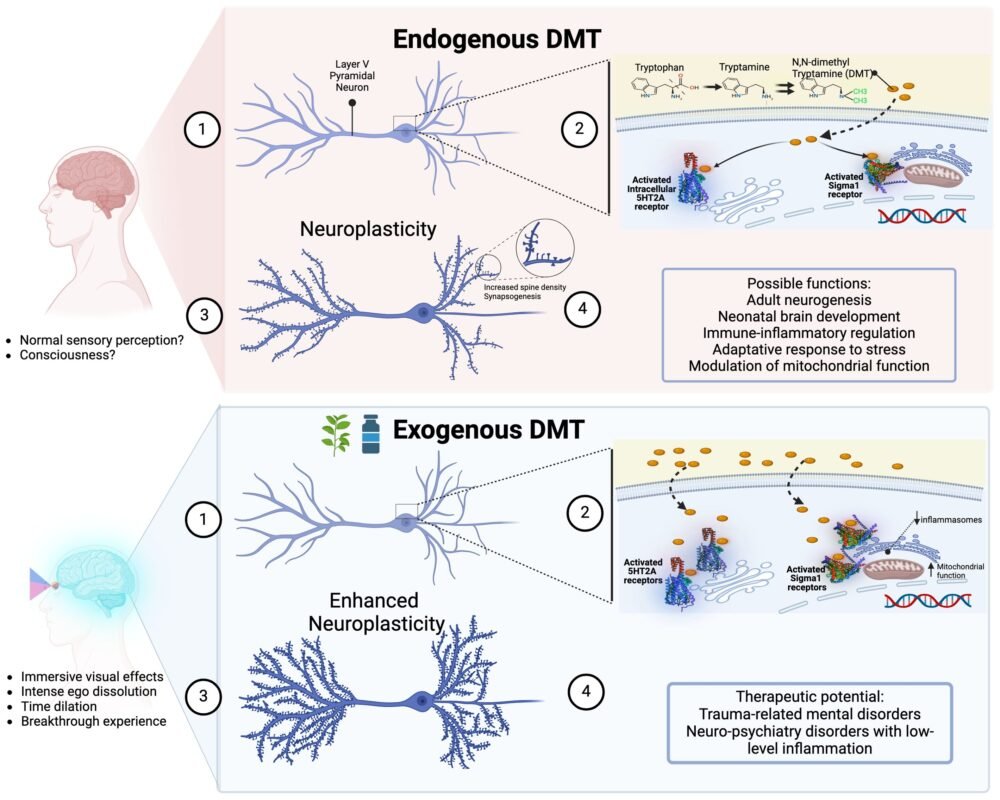
DMT is a naturally occurring tryptamine compound found in various plant species and produced in trace amounts within the human body. Structurally similar to serotonin, a neurotransmitter that regulates mood, perception, and cognition, DMT functions primarily as an agonist at serotonin receptors, particularly the 5-HT2A receptor.
Chemical Classification and Legal Status
Chemical properties:
- Full name: N,N-Dimethyltryptamine
- Class: Tryptamine hallucinogen
- Molecular formula: C₁₂H₁₆N₂
- Appearance: White crystalline solid in pure form
Legal classification:
- Schedule I controlled substance in the United States
- Illegal in most countries under international drug control treaties
- No approved medical uses outside limited research contexts
- Possession, distribution, and manufacture carry serious legal penalties
Traditional and Modern Contexts
DMT appears in traditional indigenous practices, most notably in ayahuasca brews used in South American ceremonial contexts. However, synthetic DMT used recreationally bears little resemblance to these traditional practices in terms of preparation, setting, cultural framework, or administration method.
Recent years have seen increased scientific interest in DMT’s effects on consciousness and potential therapeutic applications, with research occurring at institutions like Imperial College London and Johns Hopkins University. This clinical research uses pharmaceutical-grade substances, rigorous medical oversight, and careful participant screening—conditions absent from recreational use.
How DMT Affects the Brain
When introduced to the body, DMT rapidly crosses the blood-brain barrier and binds to serotonin receptors throughout the central nervous system. This binding triggers cascading neurochemical changes that profoundly alter:
- Visual processing in the occipital cortex
- Emotional regulation in limbic structures
- Self-referential thinking in the default mode network
- Sensory integration in the thalamus
- Memory formation in the hippocampus
These widespread neurological effects explain why DMT brain effects are so comprehensive and intense, affecting virtually every aspect of conscious experience. For a detailed analysis of DMT’s overall risk profile, read our comprehensive DMT safety profile guide.
Short-Term Side Effects of DMT
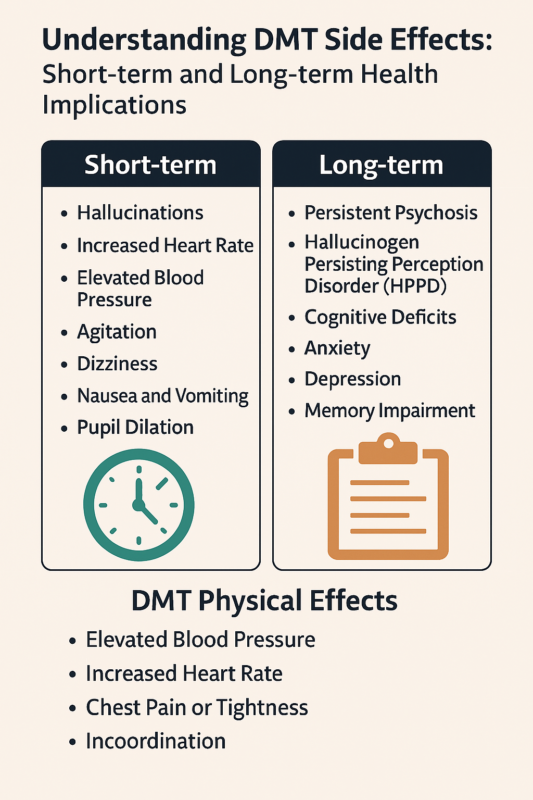
The short term effects of DMT occur rapidly—often within seconds when vaporized or smoked—and encompass profound psychological, perceptual, physical, and emotional changes.
Immediate Onset and Intensity
Unlike many psychoactive substances that build gradually, DMT’s effects emerge with startling rapidity:
- Onset time: 15-60 seconds when smoked or vaporized; 30-45 minutes when consumed orally with MAO inhibitors
- Peak intensity: Reached within 2-5 minutes of inhalation
- Total duration: Typically 15-45 minutes for smoked DMT; 4-6 hours for oral preparations
This rapid onset provides no opportunity for gradual adjustment or decision to stop once effects begin, distinguishing DMT from substances with slower pharmacological profiles.
Psychological and Perceptual Effects
Hallucinations and perceptual distortions:
- Intense visual hallucinations including geometric patterns, fractals, and complex imagery
- Perceived encounters with entities or presences
- Complete transformation of visual environment
- Auditory hallucinations and sound distortions
- Synesthesia (crossing of sensory modalities)
- Time distortion ranging from temporal compression to perceived timelessness
Cognitive alterations:
- Profound confusion and disorientation
- Loss of connection to baseline reality
- Inability to recognize familiar environments or people
- Disrupted linear thinking and logic
- Memory impairment during acute intoxication
- Difficulty communicating or forming coherent thoughts
Emotional responses:
- Extreme emotional volatility
- Overwhelming euphoria or profound terror
- Sense of dying or losing sanity
- Feelings of cosmic significance or meaninglessness
- Emotional overwhelm beyond normal human experience range
Physical Side Effects During Acute Intoxication
Cardiovascular effects:
- Rapid heart rate (tachycardia), sometimes exceeding 120 beats per minute
- Elevated blood pressure, occasionally reaching dangerous levels
- Chest tightness or pressure
- Irregular heartbeat (arrhythmia) in some cases
Neurological and motor effects:
- Extreme pupil dilation (mydriasis)
- Loss of motor coordination and balance
- Tremors or involuntary muscle movements
- Difficulty speaking or complete inability to communicate
- Nystagmus (involuntary eye movements)
Gastrointestinal responses:
- Nausea and vomiting, particularly with oral administration
- Ruokahaluttomuus
- Kuiva suu
- Abdominal discomfort
Other physical manifestations:
- Profuse sweating or chills
- Fluctuations in body temperature
- Hyperventilation or altered breathing patterns
- Dizziness and vertigo
- Complete physical incapacitation during peak effects These effects are particularly concerning with modern delivery methods—learn more about risks in our article on DMT vape pens.
Duration of Acute Side Effects
For smoked or vaporized DMT, most DMT after effects from acute intoxication resolve within 30-60 minutes. However, psychological processing, emotional residue, and subtle perceptual changes may persist for hours beyond the primary experience.
Oral DMT (as in ayahuasca preparations) produces effects lasting 4-6 hours, with physical side effects like nausea often continuing throughout this extended period.
Common Psychological Side Effects of DMT
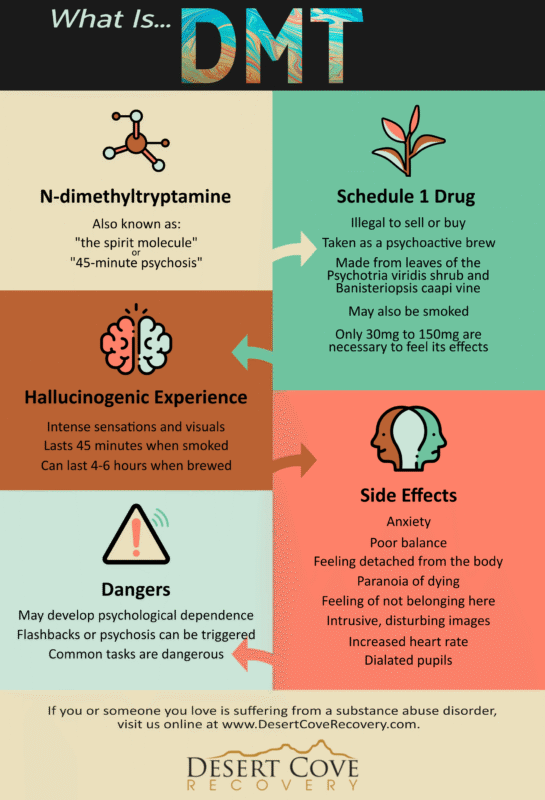
The psychological effects of DMT represent the most profound and potentially distressing aspects of the drug’s action, with consequences ranging from temporary discomfort to lasting psychological trauma.
Anxiety and Panic Reactions
DMT and anxiety are intimately connected, with anxiety responses occurring across a spectrum of severity:
Mild to moderate anxiety:
- Nervousness or apprehension during onset
- Concern about loss of control
- Social anxiety if others are present
- Manageable with reassurance and calming environment
Severe anxiety and panic:
- Overwhelming terror and existential dread
- Panic attacks with physiological symptoms (hyperventilation, chest pain, trembling)
- Sensation of impending death or permanent insanity
- Complete inability to be reassured or calmed
- Panic persisting beyond the drug’s primary duration
Medical literature documents numerous emergency department presentations for DMT-induced panic attacks severe enough to warrant medical intervention, sometimes requiring sedation with benzodiazepines.
Confusion and Disorientation
Cognitive confusion during DMT intoxication can reach extreme levels:
- Complete inability to remember having taken a substance
- Confusion about identity, location, and circumstances
- Inability to distinguish hallucinations from reality
- Disorientation persisting after primary effects subside
- Residual confusion lasting hours in some cases
This profound disorientation creates safety risks, as individuals cannot make rational decisions about their own wellbeing or respond appropriately to environmental hazards.
Paranoia and Delusional Thinking
Paranoid responses:
- Beliefs that others intend harm
- Conviction of being watched or monitored
- Perception of hostile entities or presences
- Suspicion and mistrust of companions or environment
- Paranoid thoughts persisting into the recovery period
Delusional experiences:
- Fixed false beliefs about reality, identity, or circumstances
- Grandiose delusions (believing oneself to have special powers or significance)
- Persecutory delusions requiring protective actions
- Religious or mystical delusions with behavioral consequences
These psychological responses can trigger dangerous behaviors as individuals attempt to escape perceived threats or act on delusional beliefs.
Emotional Distress and Dysphoria
Not all emotional responses to DMT are neutral or positive:
Negative emotional states:
- Profound sadness or grief
- Overwhelming sense of meaninglessness or nihilism
- Existential horror or despair
- Feelings of contamination or violation
- Intense guilt or shame
- Emotional numbness or dissociation
These distressing emotional experiences may constitute psychological trauma, particularly when they involve confrontation with fears, traumatic memories, or overwhelming content the individual cannot process or integrate.
Depersonalization and Derealization
Many DMT users report experiences of:
Depersonalization:
- Feeling detached from one’s own body, thoughts, or emotions
- Observing oneself from an external perspective
- Sense that one’s body or mind is not real
- Loss of sense of agency or control over thoughts and actions
Derealization:
- Perception that the external world is unreal, dreamlike, or artificial
- Feeling that familiar people or places are strange or unfamiliar
- Visual distortions making the environment appear two-dimensional or altered
- Sense of being in a simulation or alternate reality
While these dissociative experiences typically resolve as the drug’s effects diminish, some individuals experience persistent depersonalization/derealization symptoms requiring psychological intervention.
Physical Side Effects of DMT on the Body
The physical effects of DMT extend beyond the brain, affecting multiple organ systems and creating potential medical complications.
Cardiovascular System Impact
DMT’s effects on the cardiovascular system represent significant health concerns, particularly for individuals with underlying heart conditions:
Acute cardiovascular changes:
- Heart rate increases of 20-50 beats per minute above baseline
- Blood pressure elevations sometimes exceeding 180/100 mmHg
- Increased cardiac workload and oxygen demand
- Risk of hypertensive crisis in susceptible individuals
Potential cardiovascular complications:
- Myocardial infarction (heart attack) in individuals with coronary artery disease
- Stroke from sudden blood pressure spikes
- Cardiac arrhythmias including atrial fibrillation
- Exacerbation of existing heart conditions
- Increased risk for those with congenital heart defects
Emergency medicine literature documents cases of previously healthy young adults experiencing cardiac events following DMT use, emphasizing that cardiovascular risks exist even without known pre-existing conditions.
Respiratory Effects
Breathing pattern changes:
- Hyperventilation during anxiety responses
- Respiratory depression in some cases
- Sensation of breathlessness or suffocation
- Irregular breathing rhythms
Lung-related concerns:
- When vaporized or smoked, lung irritation and inflammation
- Potential for chemical pneumonitis from contaminated preparations
- Exacerbation of asthma or chronic respiratory conditions
- Unknown long-term pulmonary effects of repeated inhalation
Neurological Effects Beyond Psychology
Physical neurological responses:
- Seizures in susceptible individuals or at high doses
- Severe headaches during or after use
- Tremors and muscle rigidity
- Coordination impairment lasting beyond acute intoxication
- Potential neurotoxicity at high doses (animal studies suggest possibility)
Sensory system effects:
- Temporary vision problems beyond hallucinations (blurred vision, light sensitivity)
- Tinnitus (ringing in ears)
- Altered tactile sensation
- Temperature regulation dysfunction
Gastrointestinal and Metabolic Effects
Digestive system impacts:
- Severe nausea requiring medical attention in some cases
- Vomiting and risk of aspiration
- Dehydration from fluid loss
- Abdominal cramping
- Loss of appetite extending beyond acute effects
Metabolic changes:
- Alterations in blood glucose levels
- Electrolyte imbalances from vomiting or sweating
- Changes in stress hormone levels (cortisol, adrenaline)
Physical Injury Risks
Beyond direct physiological effects, DMT’s incapacitating nature creates significant injury potential:
Common injury scenarios:
- Falls from loss of balance and coordination
- Head trauma from uncontrolled movements
- Burns from dropped smoking devices
- Lacerations or bruising from environmental hazards
- Drowning risk if used near water
- Traffic accidents if effects occur while driving
Emergency departments regularly treat injuries sustained during DMT intoxication, with the rapid onset providing no opportunity to move to safer locations before incapacitation occurs.
DMT Side Effects on Mental Health
The relationship between DMT mental health risks and psychiatric conditions represents one of the most serious areas of concern for medical professionals.
Acute Psychiatric Emergencies
Drug-induced psychosis:
- Complete break from reality lasting hours to days
- Hallucinations persisting beyond drug clearance
- Severe paranoid delusions requiring hospitalization
- Agitation and bizarre behavior
- Potential for violence toward self or others
- Need for antipsychotic medication and psychiatric observation
Emergency psychiatry literature documents numerous cases of DMT-induced psychotic episodes requiring inpatient psychiatric care, with some individuals experiencing psychotic symptoms for days after drug exposure.
Triggering of Underlying Mental Illness
DMT can precipitate the emergence of latent psychiatric conditions:
Schizophrenia and psychotic disorders:
- First psychotic episode in individuals genetically predisposed
- Acceleration of schizophrenia onset by months or years
- Permanent exacerbation of pre-existing psychotic symptoms
- Family history of schizophrenia represents major risk factor For comprehensive information about mental health vulnerabilities, see our detailed guide on DMT and pre-existing health conditions.
Bipolar disorder destabilization:
- Triggering of manic episodes
- Severe depressive episodes following use
- Rapid cycling between mood states
- Medication resistance after psychedelic-induced destabilization
Anxiety Disorders and Panic
Beyond acute anxiety during intoxication, DMT can contribute to lasting anxiety problems:
Post-DMT anxiety manifestations:
- Development of panic disorder with recurrent attacks
- Generalized anxiety disorder onset
- Specific phobias related to trip content
- Health anxiety from physical sensations experienced
- Social anxiety from fear of loss of control
Exacerbation of existing anxiety:
- Worsening of pre-existing anxiety disorders
- Increased frequency and severity of panic attacks
- Resistance to previously effective treatments
- Development of agoraphobia or other avoidance behaviors
Post-Traumatic Stress from DMT Experiences
Some individuals develop PTSD-like symptoms following particularly distressing DMT experiences:
Trauma responses:
- Intrusive memories and flashbacks to traumatic trip content
- Nightmares incorporating trip imagery or themes
- Hypervigilance and exaggerated startle response
- Avoidance of reminders of the experience
- Negative alterations in mood and cognition
- Persistent altered worldview from disturbing revelations
These trauma symptoms can persist for months or years, sometimes requiring specialized trauma-focused therapy for resolution.
Suicidal Ideation and Behavior
Medical literature documents cases of suicidal thoughts and attempts connected to DMT use:
Suicide risk factors:
- Overwhelming existential despair during or after experience
- Belief that baseline reality is unbearable after profound altered states
- Depression triggered by negative experiences
- Desire to permanently return to DMT state
- Psychotic symptoms with command hallucinations
Mental health professionals emphasize that individuals experiencing suicidal thoughts following DMT use require immediate psychiatric evaluation and intervention.
Long-Term Side Effects of DMT
Understanding long term effects of DMT requires examining both documented cases and limitations in current research.
Persistent Perceptual Changes
Hallucinogen Persisting Perception Disorder (HPPD):
HPPD involves visual disturbances continuing long after drug use:
Type 1 HPPD (episodic):
- Random, brief flashbacks to hallucinogenic experiences
- Triggered by stress, darkness, or other psychoactive substances
- Usually resolves over months
- Generally less distressing than Type 2
Type 2 HPPD (persistent):
- Constant visual disturbances including:
- Visual snow or static
- Trails following moving objects
- Halos around lights
- Geometric patterns in peripheral vision
- Objects appearing to breathe or move
- Severely impacts quality of life
- May persist for years
- Treatment options limited and variably effective
While HPPD is relatively rare, cases connected to DMT have been documented in medical literature, with some individuals reporting debilitating symptoms requiring ongoing psychiatric care.
Cognitive and Memory Changes
Potential long-term cognitive effects:
- Subtle changes in memory formation and retrieval
- Altered information processing speed
- Executive function changes affecting planning and decision-making
- Difficulty concentrating or maintaining attention
- Changes in abstract thinking and pattern recognition
Research on long-term cognitive effects remains limited, with most studies focusing on other psychedelics. Small-scale research suggests frequent DMT use may produce measurable cognitive changes, though whether these represent impairment or enhancement remains debated.
Personality and Worldview Alterations
DMT side effects long term may include fundamental shifts in:
Personality changes:
- Alterations in openness, conscientiousness, or neuroticism
- Changes in values and life priorities
- Modified social behavior and relationship patterns
- Shifts in risk-taking and impulsivity
Worldview modifications:
- Altered beliefs about reality, consciousness, or spirituality
- Changes in religious or philosophical perspectives
- Modified sense of meaning and purpose
- Existential confusion requiring prolonged integration
While some individuals view these changes positively, others experience distress from altered fundamental beliefs incompatible with their previous worldview or social environment.
Mood Regulation and Emotional Processing
Lasting mood and emotional effects:
- Persistent depression following negative experiences
- Emotional flatness or reduced capacity for joy
- Emotional lability (rapid mood fluctuations)
- Difficulty regulating emotional responses
- Altered baseline mood set point While some clinical research explores therapeutic applications, it’s crucial to understand the distinction between controlled medical settings and recreational use—read our analysis of DMT in mental health treatment for context.
Social and Functional Impairment
Chronic or heavy DMT use can produce:
Functional consequences:
- Social withdrawal and isolation
- Occupational or academic performance decline
- Relationship deterioration
- Loss of interest in previously valued activities
- Financial problems from prioritizing drug acquisition
Psychological dependence patterns:
- While DMT doesn’t produce physical addiction, psychological patterns of compulsive use can develop
- Preoccupation with obtaining and using DMT
- Continued use despite negative consequences
- Increasing frequency or dose escalation
- Using DMT to escape problems rather than address them
Research Limitations on Long-Term Effects
Current understanding of DMT side effects long term faces significant limitations:
- Most research focuses on single or infrequent use in controlled settings
- Limited longitudinal studies following users over years
- Difficulty distinguishing DMT effects from other substance use
- Self-selection bias in research participants
- Lack of standardized assessment methods
- Ethical constraints limiting research scope
As such, long-term safety profile remains incompletely characterized, particularly for frequent or heavy users.
Can DMT Cause Psychosis or Hallucination Disorders?
The relationship between DMT and psychosis represents a critical concern with significant clinical evidence.
Acute Psychotic Episodes
DMT can trigger frank psychotic episodes characterized by:
Psychotic symptoms:
- Hallucinations persisting beyond the expected drug duration
- Fixed delusional beliefs resistant to contrary evidence
- Severely disorganized thinking and behavior
- Catatonia or extreme agitation
- Complete loss of insight into an abnormal mental state
Emergency psychiatric literature documents cases requiring:
- Involuntary psychiatric hospitalization
- Antipsychotic medication
- Days to weeks of inpatient treatment
- Extended monitoring after stabilization
Distinguishing Drug-Induced Psychosis from Primary Psychotic Disorders
Drug-induced psychosis characteristics:
- Temporal relationship to substance use
- Typically resolves within days to weeks
- No symptoms before drug exposure
- Clear onset during or shortly after DMT use
Primary psychotic disorder features:
- May persist indefinitely without treatment
- Symptoms often continue beyond substance clearance
- May reveal pre-existing vulnerability
- Can be permanently triggered by DMT exposure
The challenge is that DMT may precipitate primary psychotic disorders in predisposed individuals, making the distinction clinically complex.
Risk Factors for Psychosis
Vulnerability indicators:
Genetic factors:
- Family history of schizophrenia (strongest predictor)
- Family history of bipolar disorder with psychotic features
- Genetic markers associated with psychotic disorders
- First-degree relatives with psychosis create significantly elevated risk
Personal psychiatric history:
- Previous psychotic symptoms, even brief or substance-related
- Schizotypal personality traits
- Prodromal psychotic symptoms
- Early-onset behavioral problems
Demographic factors:
- Younger age (adolescence and early adulthood carry higher risk)
- Male gender slightly elevated risk
- Substance use disorder history
- Trauma exposure and adverse childhood experiences
Schizophrenia and Psychotic Disorder Precipitation
Medical evidence indicates DMT can trigger first psychotic episodes in vulnerable individuals:
Mechanism of precipitation:
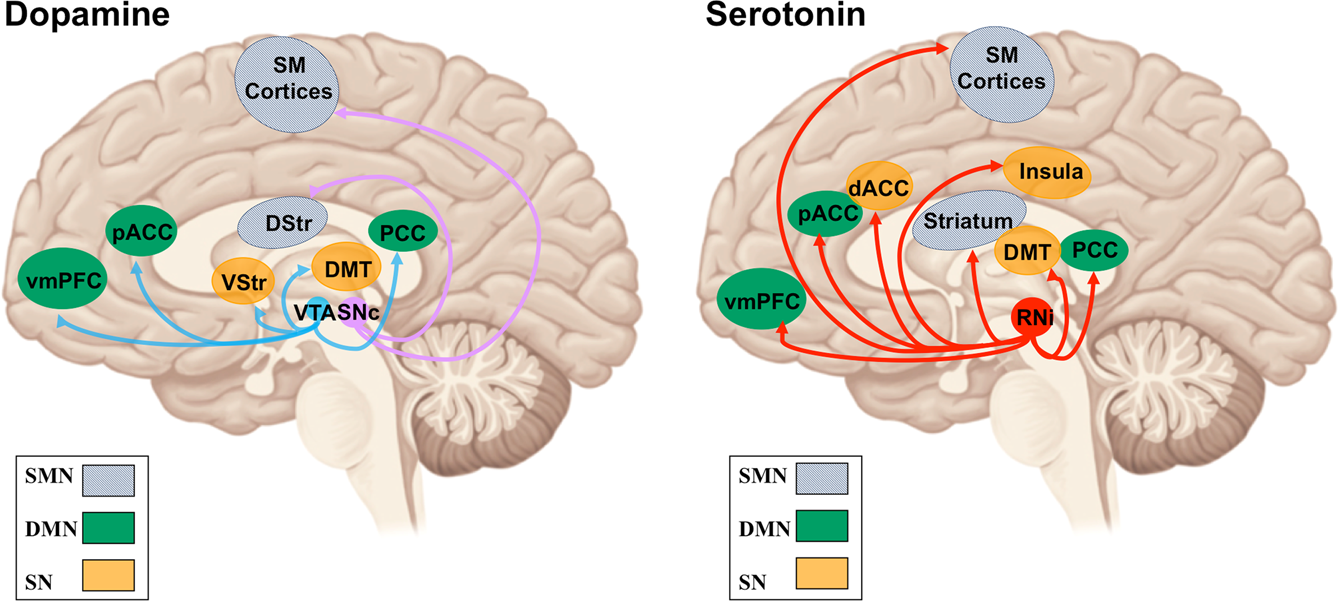
- Severe stress on vulnerable neurocircuitry
- Disruption of dopamine regulation
- Triggering of latent genetic vulnerability
- Accelerating onset of disorder that would have emerged eventually
Research suggests individuals who develop persistent psychosis after psychedelic use often had unrecognized vulnerability factors, though healthy individuals with no apparent risk have also developed lasting psychotic symptoms in rare cases.
Other Hallucination Disorders
Beyond acute psychosis, DMT may contribute to:
Persistent hallucinations:
- Visual hallucinations continuing beyond acute intoxication
- Auditory hallucinations developing or worsening
- Complex hallucinations requiring medical evaluation
Dissociative disorders:
- Persistent depersonalization disorder
- Derealization symptoms interfering with functioning
- Dissociative amnesia for periods during or after use
These conditions require psychiatric evaluation and treatment, as they can significantly impair quality of life and functioning.
Is DMT Dangerous? Understanding the Health Risks
Assessing whether is DMT dangerous requires examining multiple risk dimensions and contextualizing DMT’s safety profile.
Acute Toxicity and Lethality
Pharmacological toxicity:
- No documented human deaths from DMT toxicity alone
- Extremely high therapeutic index (ratio of toxic to active dose)
- Death from direct poisoning essentially impossible at recreational doses
- Animal studies suggest lethal dose far exceeds any realistic human consumption
While direct toxicity is minimal, the complete risk assessment is more complex—see our comprehensive DMT safety profile for detailed analysis.
This favorable toxicological profile distinguishes DMT from substances like opioids or alcohol, where overdose deaths from direct toxicity occur regularly.
Indirect Mortality Risks
While direct toxicity is minimal, health risks of DMT include serious indirect dangers:
Causes of DMT-related deaths documented in medical literature:
Accidents and injuries:
- Falls from heights during hallucinations
- Drowning from water submersion
- Traffic fatalities from driving under influence
- Burns and smoke inhalation from device-related fires
- Wandering into dangerous environments
Medical emergencies:
- Cardiovascular events (heart attack, stroke)
- Complications from pre-existing conditions
- Aspiration from vomiting while incapacitated
- Hyperthermia from environmental exposure
Behavioral risks:
- Suicide during acute psychotic episodes
- Dangerous behavior from delusional beliefs
- Violence toward self or others
- Accidents from complete disorientation
These indirect risks mean DMT can absolutely be life-threatening despite low direct toxicity.
Comparison to Other Substances
Contextualizing DMT’s risk profile:
Lower risk than:
- Alcohol (direct toxicity, addiction potential, organ damage)
- Opioids (overdose death, addiction, respiratory depression)
- Stimulants (cardiovascular events, addiction, neurotoxicity)
- Benzodiazepines (respiratory depression, severe withdrawal)
Higher risk than:
- Cannabis (psychological intensity, psychotic risk)
- Psilocybin mushrooms (intensity, duration, controllability)
- MDMA (psychological intensity, though MDMA has different physical risks)
Unique risk profile:
- Extreme psychological intensity unmatched by most substances
- Unpredictability of psychological response
- Complete incapacitation during peak effects
- Rapid onset preventing intervention
- Potency creating dosing difficulties
Individual Risk Variability
Is DMT dangerous depends significantly on individual factors:
Lower relative risk individuals:
- No personal or family psychiatric history
- No cardiovascular conditions
- Psychologically stable and prepared
- Safe, supervised environment
- Screened for contraindications
Higher relative risk individuals:
- Mental health conditions, especially psychotic or bipolar disorders
- Cardiovascular disease or risk factors
- Medications interacting with DMT
- History of trauma or adverse drug reactions
- Lack of support or unsafe environment
Even low-risk individuals face unpredictable psychological responses, and no screening can eliminate risk entirely.
Unpredictability as Core Risk Factor
A fundamental danger of DMT is profound unpredictability:
- No reliable correlation between dose and subjective intensity
- Vastly different experiences from same dose in same individual
- No way to predict who will have terrifying versus neutral experiences
- Psychological preparation provides limited protection
- Previous psychedelic experience doesn’t ensure positive DMT response
This unpredictability means every use carries unknown risks, regardless of prior experiences or precautions.
DMT Safety Concerns and Medical Warnings
Medical professionals and public health organizations emphasize numerous DMT safety concerns when discussing this substance.
Why Healthcare Providers Discourage DMT Use
Medical consensus against recreational use:
Evidence-based concerns:
- No approved medical applications outside limited research
- Impossible to screen for contraindications in recreational contexts
- No quality control or purity verification
- Significant psychological risks even in ideal conditions
- Legal consequences carrying lasting harm
- Lack of emergency medical response during acute effects
- Absence of psychological support for integration
Organizations including the National Institute on Drug Abuse (NIDA), World Health Organization (WHO), Substance Abuse and Mental Health Services Administration (SAMHSA), and American Psychiatric Association advise against DMT use outside approved research protocols.
Emergency Medical Considerations
Emergency department challenges:
Clinical management difficulties:
- Extreme agitation complicating assessment and treatment
- Inability of patient to provide medical history during acute intoxication
- Difficulty distinguishing DMT effects from other medical emergencies
- Unknown substance purity creating treatment uncertainty
- Potential for prolonged observation requirements
Treatment approaches:
- Supportive care in calm, low-stimulation environment
- Benzodiazepines for severe agitation or anxiety
- Antipsychotics for persistent psychotic symptoms (controversial)
- Cardiac monitoring for cardiovascular complications
- Psychiatric evaluation for disposition decisions
Drug Interactions and Contraindications
Critical medication interactions:
Dangerous combinations:
MAO inhibitors (MAOIs):
- Dramatically intensify and prolong DMT effects
- Risk of serotonin syndrome (potentially fatal)
- Used intentionally in ayahuasca but creates severe risks
- Includes psychiatric medications and some foods
SSRIs and SNRIs:
- May reduce DMT effects (not protective)
- Potential for serotonin syndrome at high doses
- Unpredictable interactions
Antipsychotics:
- Block psychedelic effects
- May create paradoxical reactions
Lithium:
- Significantly increased seizure risk with psychedelics
- Potentially dangerous interaction
Stimulants:
- Compounded cardiovascular stress
- Extreme anxiety and psychological distress
- Unpredictable psychological responses
Tramadol and other serotonergic drugs:
- Serotonin syndrome risk
- Symptoms include agitation, hyperthermia, muscle rigidity, seizures
Contamination and Purity Concerns
Risks from unknown substance composition:
- No regulatory oversight or quality testing
- Potential contamination with toxic substances
- Misrepresentation of substance identity
- Variable potency creating dosing unpredictability
- Adulterants with their own dangerous effects
- Synthesis byproducts with unknown toxicity
Cases of severe medical complications from contaminated hallucinogens underscore the danger of unregulated substances.
Legal and Social Consequences
DMT safety concerns extend beyond health:
Legal ramifications:
- Criminal charges carrying imprisonment
- Permanent criminal record affecting employment, housing, education
- Professional license implications
- Travel restrictions and visa complications
- Financial costs of legal defense
Social consequences:
- Relationship damage from behavioral changes
- Employment loss from legal issues or impairment
- Social stigma and isolation
- Family conflict and trust erosion
These consequences can create lasting harm exceeding direct health effects.
Who Is Most at Risk from DMT Side Effects?
Certain populations face elevated vulnerability to adverse effects of DMT.
Mental Health Condition Contraindications
Absolute contraindications (strongly advised against use):
Psychotic disorders:
- Schizophrenia or schizoaffective disorder
- Delusional disorder
- Psychotic depression or bipolar disorder with psychotic features
- Brief psychotic disorder history
- Family history of psychotic disorders
Bipolar disorder:
- Type I or Type II bipolar disorder
- Cyclothymia with severe mood swings
- Family history of bipolar disorder
Personality disorders with psychotic features:
- Borderline personality disorder with dissociation
- Schizotypal personality disorder
- Paranoid personality disorder
Relative contraindications (significantly elevated risk):
Anxiety disorders:
- Panic disorder
- Generalized anxiety disorder
- Social anxiety disorder
- PTSD or complex trauma
Mood disorders:
- Major depressive disorder, especially severe
- Persistent depressive disorder
- Treatment-resistant depression
Understanding your personal risk factors is essential before considering any psychedelic substance. Our detailed article on DMT and pre-existing health conditions provides comprehensive screening information.
Dissociative disorders:
- Depersonalization/derealization disorder
- Dissociative identity disorder
- Other specified dissociative disorders
Cardiovascular Contraindications
High-risk cardiac conditions:
- Coronary artery disease or history of heart attack
- Uncontrolled hypertension
- Cardiac arrhythmias
- Heart failure
- Structural heart defects
- Family history of sudden cardiac death
- Prolonged QT interval
Cerebrovascular conditions:
- History of stroke or transient ischemic attack
- Cerebral aneurysm or vascular malformation
- Uncontrolled hypertension increasing stroke risk
Neurological Vulnerabilities
Seizure disorders:
- Epilepsy or history of seizures
- Family history of seizure disorders
- Brain injury predisposing to seizures
- Medications lowering seizure threshold
Other neurological conditions:
- Traumatic brain injury
- Brain tumors or lesions
- Dementia or cognitive impairment
- Movement disorders
Age-Related Risks
Adolescents and young adults:
- Brain development incomplete until mid-20s
- Higher risk of triggering latent mental illness
- Greater vulnerability to lasting psychological effects
- Impulsivity increasing dangerous decision-making
- Less capacity for risk assessment
Older adults:
- Increased cardiovascular risk
- Higher likelihood of contraindicated medications
- Greater sensitivity to psychological effects
- Comorbid medical conditions
- Reduced physiological resilience
Pregnancy and Reproductive Considerations
Pregnancy:
- Unknown effects on fetal development
- Potential for premature labor
- Teratogenic effects not ruled out
- Contraindicated throughout pregnancy
Breastfeeding:
- Unknown excretion in breast milk
- Potential effects on infant development
- Strongly discouraged
Medication and Substance Interactions
Individuals at high risk from interactions:
- Those taking psychiatric medications (especially MAOIs, SSRIs, lithium)
- Blood pressure medications
- Heart medications
- Anti-seizure medications
- Immunosuppressants
- Those with recent alcohol or drug use
Polydrug use concerns:
- Unpredictable interactions with other substances
- Compounded cardiovascular stress
- Enhanced psychological distress
- Complicated emergency treatment
Trauma and Adverse Experience History
Elevated psychological risk:
- Childhood trauma or abuse
- Recent traumatic experiences
- Unprocessed grief or loss
- PTSD from any cause
- History of dissociation
DMT can trigger traumatic memory recall or create retraumatization, making careful screening essential—yet impossible in unsupervised contexts.
What Medical and Public Health Experts Say About DMT
Professional medical and scientific perspectives on DMT emphasize caution and distinguish sharply between controlled research and recreational use.
Academic Research Perspectives
Clinical psychedelic research:
Leading researchers in psychedelic science consistently emphasize critical distinctions:
Dr. Rick Strassman, who conducted pioneering DMT research at University of New Mexico in the 1990s, notes that his findings on DMT’s effects should not be interpreted as endorsing recreational use. His research involved:
- Pharmaceutical-grade DMT with precise dosing
- Extensive medical and psychological screening
- Hospital setting with emergency capabilities
- Experienced medical staff present
- Structured preparation and integration
None of these safeguards exist in recreational contexts.
Dr. Robin Carhart-Harris, leading psychedelic researcher at Imperial College London, emphasizes that positive findings from controlled psychedelic research cannot be safely extrapolated to unsupervised use. The therapeutic context—including psychological support, screening, and integration—represents an inseparable component of safety and efficacy.
Emergency Medicine Perspectives
Emergency physicians document increasing DMT-related presentations:
Common emergency scenarios:
- Severe panic attacks requiring sedation
- Psychotic episodes needing psychiatric admission
- Cardiovascular events in young adults
- Trauma from accidents during intoxication
- Drug interactions creating medical complications
Emergency medicine literature emphasizes that DMT’s brief duration provides false reassurance—serious medical and psychiatric complications can develop within minutes and persist far beyond drug clearance. For a complete overview of medication risks and contraindications, consult our specialized guide on DMT drug interactions.
Psychiatry and Mental Health Perspectives
Psychiatric professionals express concern about:
Mental health implications:
- Triggering of serious mental illness
- Traumatic experiences creating lasting psychological harm
- Difficulty treating psychedelic-induced psychiatric conditions
- Patients presenting with persistent HPPD or psychosis
- Integration challenges from overwhelming experiences
The American Psychiatric Association maintains that psychedelic substances, including DMT, should only be used within approved research protocols with appropriate medical oversight and participant protections.
Addiction Medicine Views
While DMT doesn’t cause physical dependence, addiction specialists recognize problematic use patterns:
Substance use disorder criteria applicable to DMT:
- Using larger amounts or more frequently than intended
- Inability to cut down despite desire to do so
- Significant time spent obtaining, using, or recovering
- Continued use despite physical or psychological problems
- Use interfering with responsibilities
- Giving up activities for substance use
- Use in physically hazardous situations
These patterns can develop even with substances lacking physical withdrawal, emphasizing that addiction encompasses more than physical dependence.
Public Health Organization Positions
National and international health agencies:
NIDA (National Institute on Drug Abuse):
- Classifies DMT as dangerous hallucinogen
- Notes significant psychological risks
- Emphasizes lack of medical applications
- Warns about unpredictable effects
WHO (World Health Organization):
- Supports international control of DMT
- Recognizes abuse potential and health risks
- Advises against non-medical use
SAMHSA (Substance Abuse and Mental Health Services Administration):
- Provides treatment resources for hallucinogen-related problems
- Emphasizes mental health risks
- Supports harm reduction education
Neuroscience and Pharmacology Expert Opinions
Researchers studying DMT’s neurological mechanisms note:
Scientific consensus:
- DMT profoundly affects serotonin neurotransmission
- Produces widespread changes in brain connectivity
- Effects on default mode network explain ego dissolution
- Neuroplasticity changes may underlie lasting effects
- Long-term neurological consequences remain incompletely understood
Dr. David Nichols, leading psychedelic pharmacologist, emphasizes that understanding DMT’s mechanisms doesn’t make recreational use safe or advisable—it reveals how powerfully and unpredictably the substance affects brain function.
1. How long do DMT side effects last?
Acute DMT side effects from smoked or vaporized forms typically last 15-45 minutes, with peak intensity occurring within 2-5 minutes of inhalation. Physical effects like elevated heart rate and pupil dilation generally resolve within 1-2 hours. However, psychological effects including anxiety, confusion, or emotional distress may persist for hours or days after the primary experience. Some individuals experience lasting side effects including HPPD, persistent anxiety, or mood changes that can continue for weeks, months, or longer. Oral DMT (ayahuasca) produces effects lasting 4-6 hours with extended recovery periods.
2. Can DMT cause long-term mental health problems?
Yes, DMT can cause lasting mental health issues in some individuals. Documented long-term psychological effects include persistent anxiety disorders, panic disorder, HPPD (ongoing visual disturbances), depersonalization/derealization disorders, PTSD from traumatic experiences, and precipitation of psychotic disorders like schizophrenia in vulnerable individuals. Risk factors include pre-existing mental health conditions, family history of psychiatric illness, young age, high doses, and traumatic experiences during intoxication. While many users don’t experience lasting problems, the potential for serious long-term mental health consequences exists and cannot be predicted in advance.
3. Are DMT side effects permanent?
Some DMT side effects can be permanent. HPPD symptoms persist indefinitely in some cases, requiring ongoing psychiatric treatment. DMT can trigger the onset of chronic psychiatric conditions including schizophrenia, bipolar disorder, or persistent anxiety disorders that require long-term management. Personality changes and altered worldviews may be lasting. However, many acute side effects including cardiovascular changes, immediate psychological distress, and physical symptoms resolve completely within hours to days. The permanence of effects varies dramatically between individuals and cannot be reliably predicted. Learn more about comprehensive safety considerations in our DMT safety profile resource.
4. Is DMT addictive?
DMT does not cause physical addiction or withdrawal symptoms like opioids or alcohol. However, psychological dependence can develop where individuals compulsively use DMT despite negative consequences, neglect responsibilities for drug use, or use it as a maladaptive coping mechanism. Patterns meeting substance use disorder criteria can occur even without physical dependence. Some users develop preoccupation with DMT experiences and escalating use patterns. While addiction potential is lower than many substances, problematic use patterns requiring treatment can develop.
5. What are the most dangerous side effects of DMT?
The most dangerous DMT side effects include acute cardiovascular events (heart attack, stroke, severe hypertension), particularly in individuals with underlying heart conditions; drug-induced psychosis requiring hospitalization; severe panic attacks and psychological crisis; triggering of chronic mental illnesses like schizophrenia; injuries from falls, accidents, or dangerous behavior during complete incapacitation; and suicidal ideation or behavior during or after experiences. While direct toxicity is minimal, these indirect dangers can be life-threatening.
6. Can DMT trigger schizophrenia or psychosis?
Yes, DMT can trigger psychotic disorders including schizophrenia, particularly in individuals with genetic vulnerability or family history of psychosis. It can precipitate first psychotic episodes in predisposed individuals and may accelerate onset of schizophrenia that would have emerged later. Acute drug-induced psychosis can last days to weeks and sometimes persists permanently. Risk is highest in those with family history of psychotic disorders, personal history of psychotic symptoms, adolescents and young adults, and those with schizotypal personality traits. Even individuals without obvious risk factors have developed lasting psychotic conditions after DMT use in rare cases. For detailed information about mental health screening and risk factors, see DMT and pre-existing health conditions.
7. What physical health risks does DMT pose?
Physical health risks of DMT include cardiovascular stress with rapid heart rate increases and blood pressure spikes that can trigger heart attacks or strokes; respiratory effects including lung irritation from vaporization; neurological effects including seizures in susceptible individuals; severe nausea and vomiting with aspiration risk; dangerous drug interactions, particularly with MAOIs, SSRIs, and lithium; injuries from falls, burns, or accidents during incapacitation; and unknown effects from contaminated or adulterated substances. Those with heart conditions, high blood pressure, seizure disorders, or taking certain medications face elevated physical risks. Detailed information about specific medication risks is available in our guide on DMT drug interactions.
8. How does DMT affect the brain long-term?
Long-term brain effects of DMT remain incompletely understood due to limited research. Potential lasting effects include persistent changes in visual processing (HPPD), alterations in serotonin system function, possible neuroplasticity changes affecting cognition and mood, modified default mode network activity, and subtle cognitive changes affecting memory, attention, or executive function. Some users report lasting positive changes in creativity and perspective, while others experience persistent cognitive difficulties. Animal studies suggest potential neurotoxicity at high doses, but human relevance remains unclear. More research is needed to fully characterize long-term neurological impacts.
Conclusion: Understanding DMT Side Effects for Informed Decisions
DMT side effects encompass a wide spectrum of psychological, physical, and long-term health consequences that extend far beyond the brief duration of acute intoxication. While DMT’s direct toxicity is minimal compared to many substances, the profound psychological intensity, unpredictability, and potential for lasting mental health complications create significant medical concerns.
The side effects of DMT documented in medical literature include immediate dangers like cardiovascular stress, complete psychological overwhelm, and physical incapacitation creating injury risk. Beyond these acute effects, DMT side effects long term can include persistent perceptual disorders, triggered psychiatric conditions, lasting anxiety or mood problems, and fundamental alterations in cognition and personality.
Understanding DMT drug side effects requires recognizing that brief duration doesn’t equal minimal risk. The psychological effects of DMT can produce trauma, trigger serious mental illness, or create lasting distress within minutes of exposure. The physical effects of DMT on cardiovascular and neurological systems create medical emergency potential, particularly in vulnerable individuals.
Medical and public health experts consistently emphasize that DMT’s risks cannot be eliminated through preparation, set and setting optimization, or harm reduction strategies, though such approaches may reduce some dangers. The fundamental unpredictability of psychological response, impossibility of screening for contraindications in recreational contexts, and complete lack of medical oversight mean every use carries unknown risks.
For those seeking information about DMT mental health risks, DMT and anxiety, DMT and psychosis, or questioning is DMT dangerous, the medical consensus is clear: significant risks exist that can result in serious, lasting harm. While controlled clinical research continues exploring DMT’s effects and potential therapeutic applications, these findings should not be interpreted as supporting recreational use.
If you or someone you know is experiencing adverse effects from DMT use or struggling with substance use patterns, professional help is available. SAMHSA’s National Helpline (1-800-662-4357) provides free, confidential, 24/7 information and treatment referrals. Mental health professionals specializing in psychedelic integration can help process difficult experiences and address lasting psychological consequences.
Research on DMT continues evolving, and our understanding of both risks and potential applications remains incomplete. What is clear from current evidence is that DMT safety concerns are substantial, well-documented, and deserve serious consideration by anyone encountering this powerful substance. DMT long-term effects

 Finnish
  English
  German
  Spanish
  Italian
  Dutch
Dutch  Portuguese
  French
  Swedish